

Our approach uses circularly polarized light not as an energy source, but as a vector of information.
High-precision, non-invasive regulatory phototherapy, perfectly adapted to each biological profile and integrated into a preventive and regenerative terrain-based medicine.
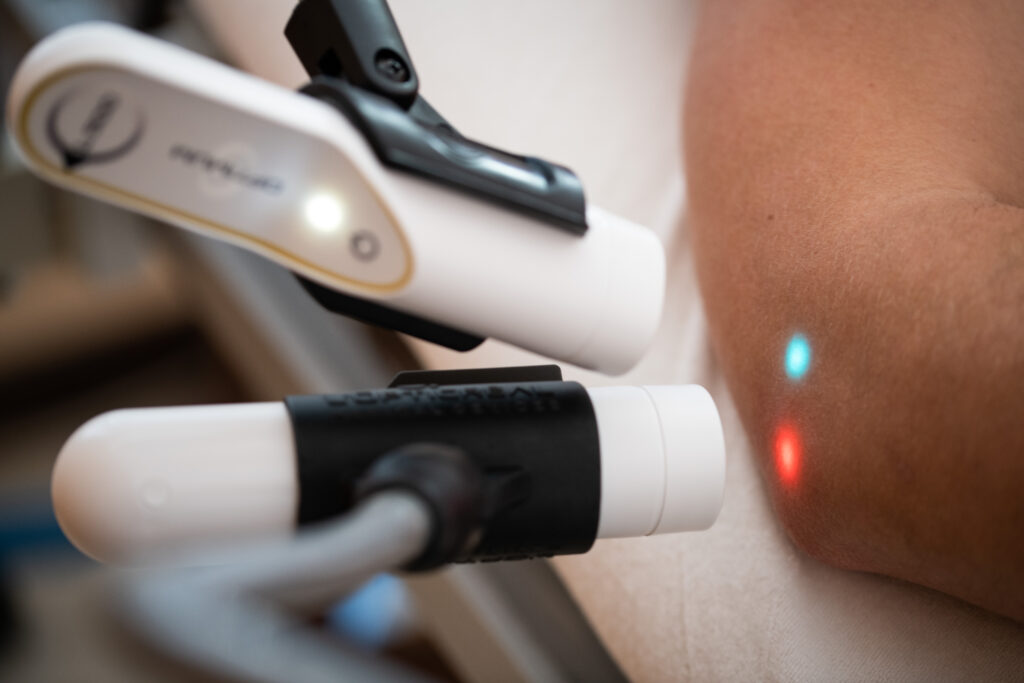
Circularly polarized light (CPL) is not defined by its color or intensity, but by the structure of its electromagnetic field. Unlike conventional light sources, it possesses unique physical properties that condition a specific interaction with living systems in biological regulation.
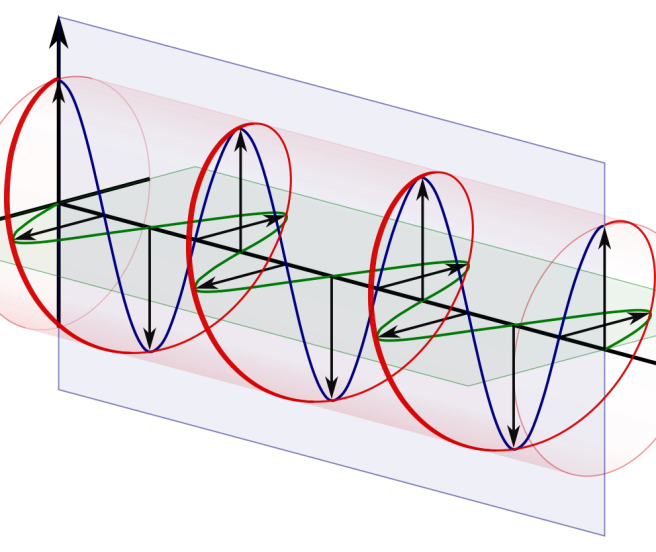
CPL guides fundamental biological exchanges in a direction compatible with the intrinsic structure of life.
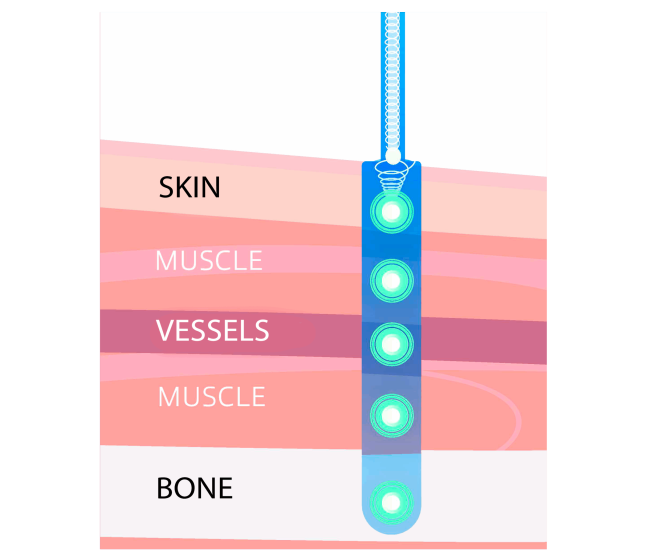
A deep biological action, achieved without mechanical or thermal stress, enabled by the coherent propagation of light through tissues and meridians.
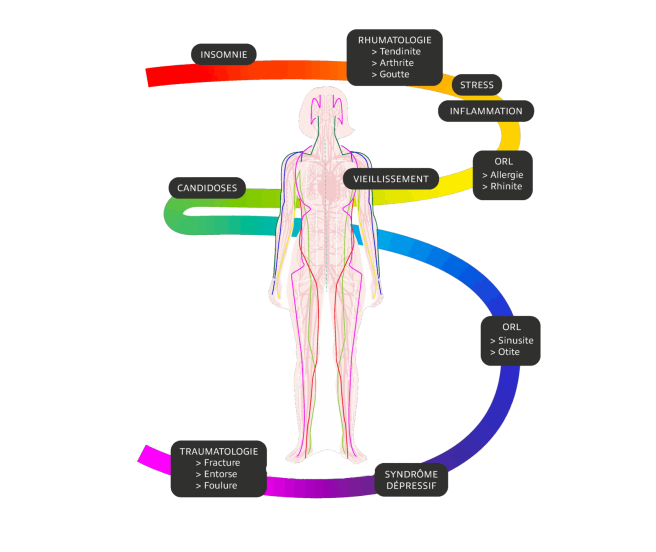
Supports the long-term stabilization and functional balance of the biological terrain, including in fragile profiles, without excessive stimulation of the system.
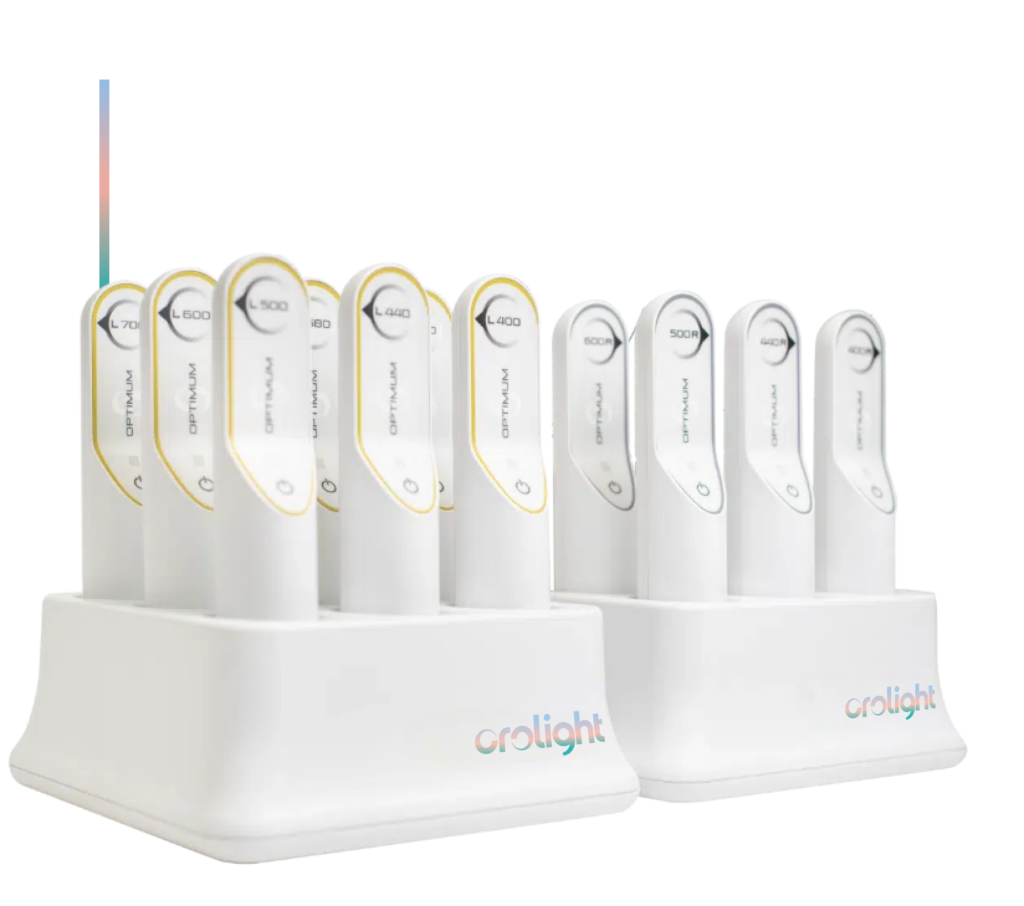
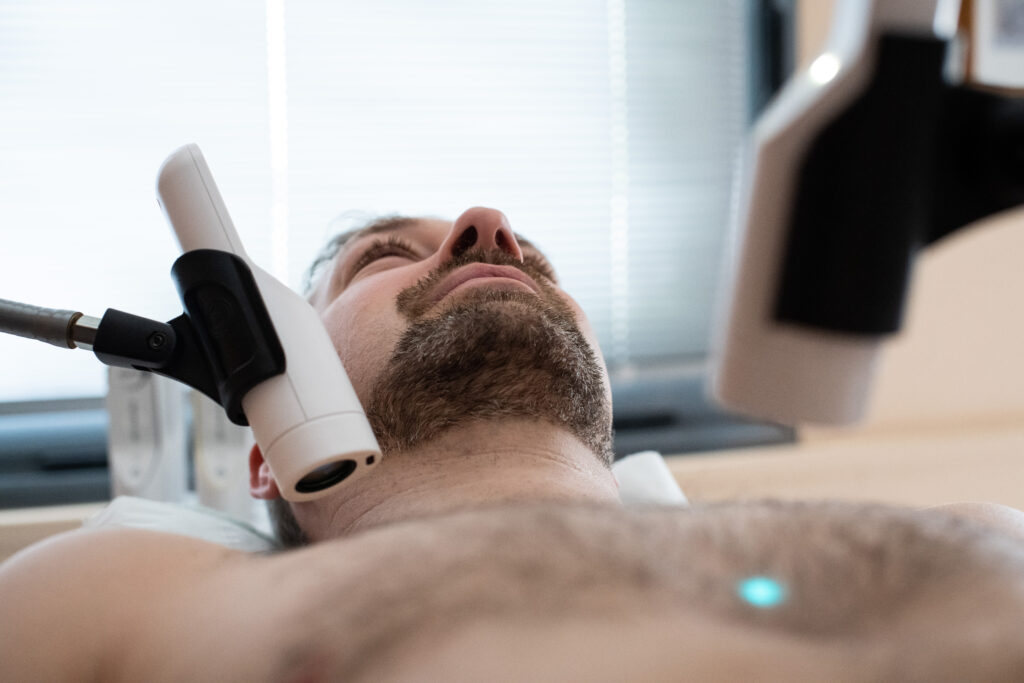
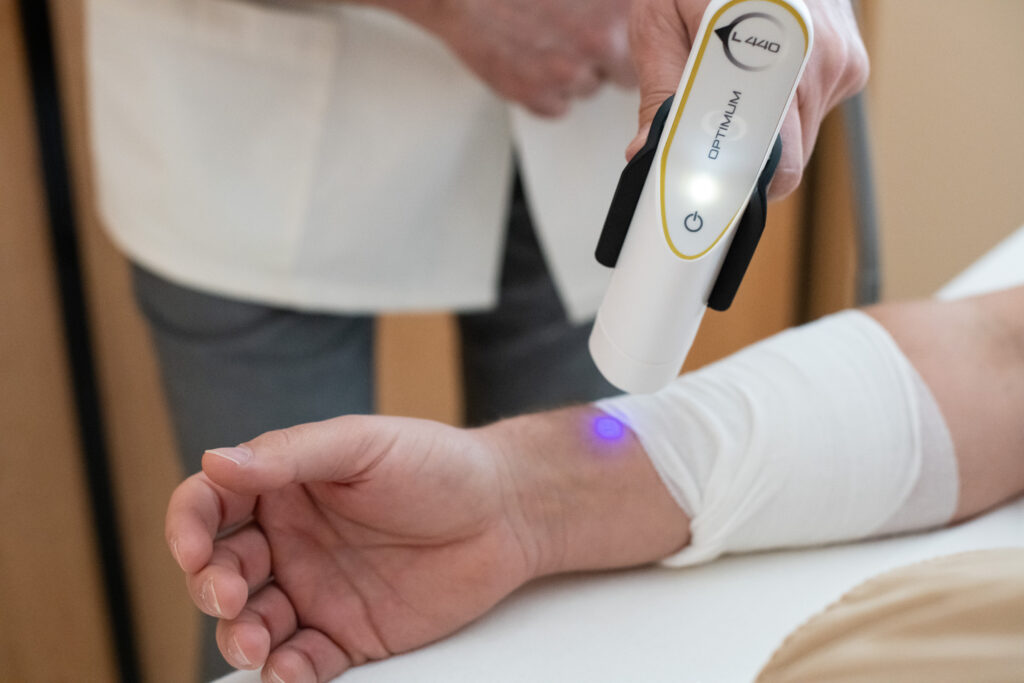
A high-precision technological device designed to generate a circularly polarized light signal. It combines 26 monochromatic wavelengths ranging from 400 to 700 nm, with right or left handed circular polarization, in order to produce a structured, stable, and biologically coherent light signal.

.
No. Circularly polarized light (CPL) is not a laser.
A laser concentrates light energy to produce thermal or ablative effects. CPL is a gentle, non-focused light whose action is based on the structure and orientation of the light field, without heating or tissue destruction.
No. It is a non-invasive light-based application.
This depends on the objective (terrain regulation, local application, or supportive care).
The treatment rhythm is adapted on a case-by-case basis. Effects may be perceived from the first session.
Conventional LEDs emit non-oriented light, with no defined directional structure of the electromagnetic field.
CPL emits a structured beam in which the electromagnetic field rotates coherently (right- or left-handed).
It is therefore a fundamentally different form of light, even at identical wavelengths.
Photobiomodulation (PBM) primarily relies on light absorption by cells—particularly mitochondria—leading to metabolic stimulation.
CPL is not limited to this mechanism. Its action is based on the structure and orientation of the light beam (right/left circular polarization), allowing a broader interaction with biological organization.
No. Scalar waves are generally described as non-directional or vortex-like fields, acting mainly through resonance between a source and a receiver. Their proposed effects rely on passive information transfer, comparable to resonance-based communication, without targeted physical interaction.
CPL, by contrast, is a real, measurable, and controlled electromagnetic wave within the visible light spectrum. It propagates as a transverse electromagnetic wave with a precisely defined field structure.
No. Circularly polarized light supports the body’s natural regulatory mechanisms without imposing constraints.
It is therefore suitable for sensitive or fragile individuals, including children and even infants.
To date, no adverse or harmful side effects have been reported.
However, the body may enter a phase of physiological adaptation, meaning it is adjusting to a new state of balance.
Temporary sensations may include:
mild fatigue,
deep relaxation,
localized warmth or slight tingling,
occasional transient emotional sensitivity.
These reactions are normal, non-dangerous, and temporary. They usually resolve quickly.